Foundation & Vision
The story of how this institution came to be, and the vision that will carry it across the generations to come.
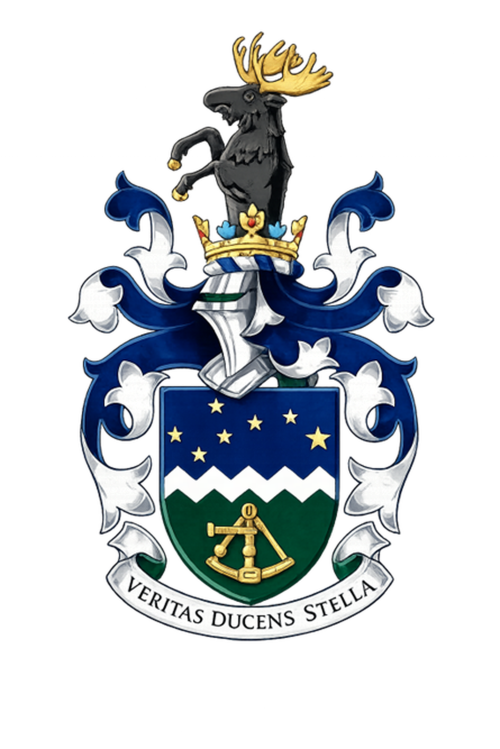
Veritas Ducens Stella
Truth is the Guiding Star
Granted by the Canadian Heraldic Authority.
Public Register of Arms, Flags and Badges of Canada.
The shield carries the colours of sky, ocean, and the natural world — a reference to the environment that has always been central to the family's work. The Ursa Minor asterism, containing the North Star, is visible only in the Northern hemisphere: it anchors the arms to northern Ontario and Manitoba, where the family's roots run deepest — to Anderson Island and the lakes and forests the family has known for generations — and to the idea of a fixed bearing, the point from which all other positions are measured.
At the base, a sextant: the instrument of precision navigation, of optics, of the long tradition of using careful measurement to find one's place in the world. The white serrated band crossing the shield represents the mountains of Switzerland — where the family now lives. Together they speak to a life held across hemispheres, oriented by the same instruments of careful measurement.
The moose that crowns the arms carries two readings at once: the Anderson family's deep tradition of hunting in rural Ontario, and the Swedish ancestry that runs through the paternal line — the moose being the national animal of Sweden. Alongside it, a Scottish bluebell for the Scottish heritage, and a yellow toadflax — a flower brought to North America by nineteenth-century settlers from the German-speaking cantons of Switzerland — for the maternal line.
The motto, Veritas Ducens Stella — Truth is the Guiding Star — was composed as a personal heraldic motto and formally registered by the Canadian Heraldic Authority. It is navigational in the same spirit as the sextant and the North Star above it: truth as the fixed point, the reliable bearing, the star that does not wander.
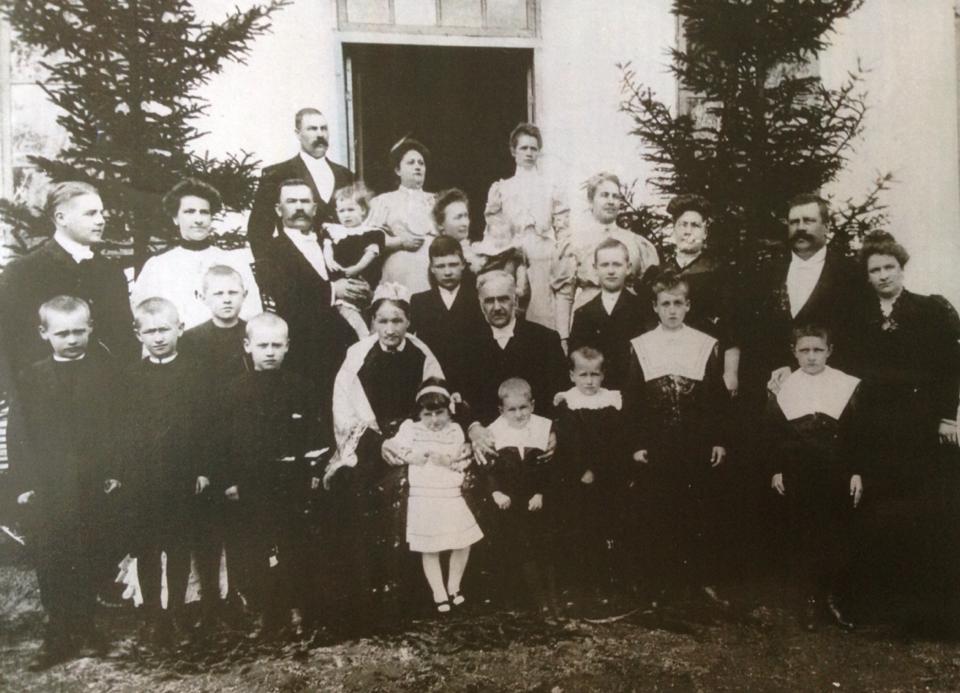
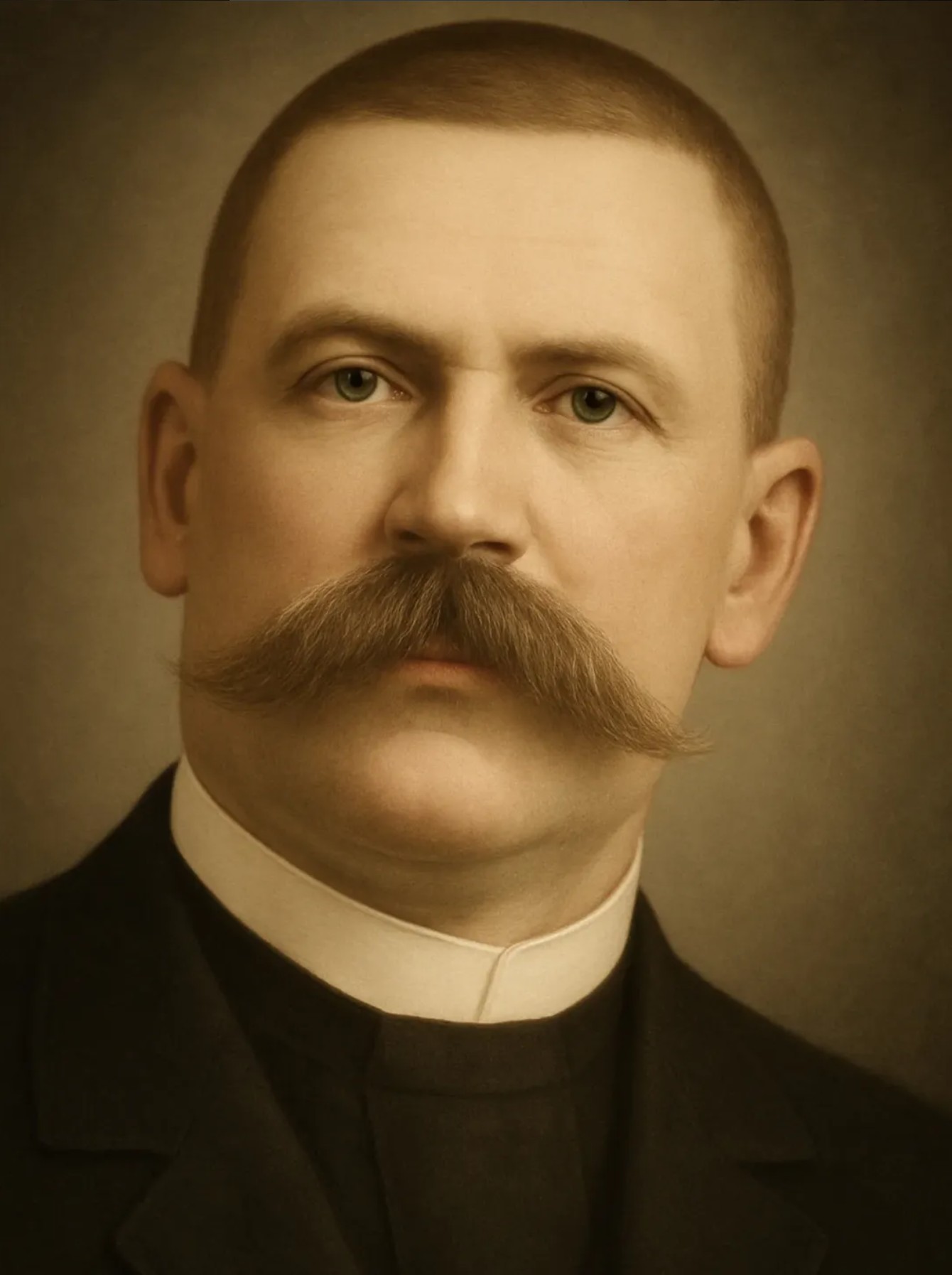
Nils Andersson
Sweden → Canada · 1912
Uno Anderson
Pioneer · Fur Trader · Northern Ontario
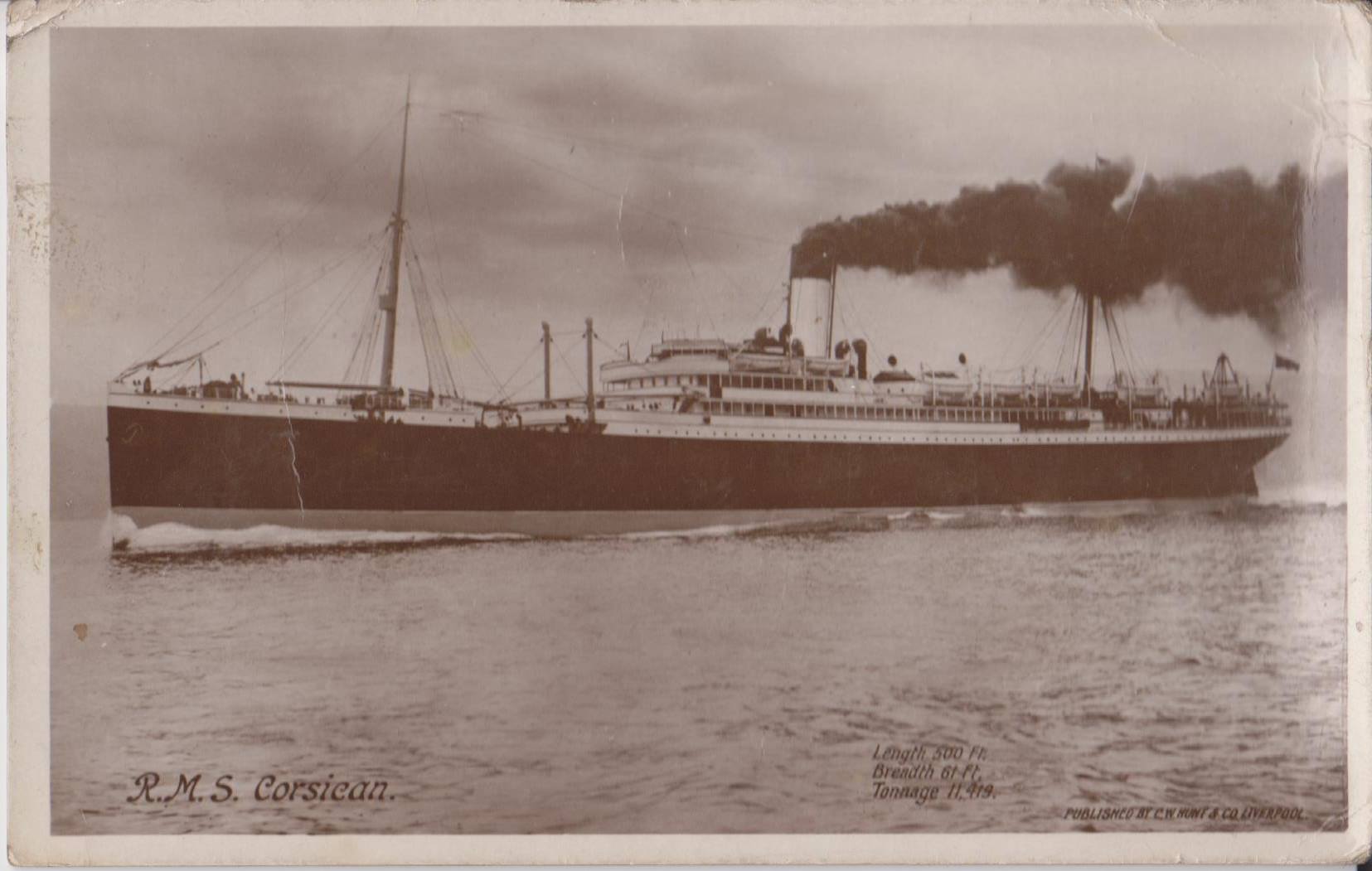
The Anderson family's roots in Canada run to 1912, when the paternal line crossed the Atlantic from Sweden on the Corsican. They built a life across northern Ontario and Manitoba as fur traders, lumberjacks, and camp and farm owners — working people, oriented toward the land, accumulating the kind of practical knowledge of this country that only comes from living closely with it. Anderson Island in northern Ontario remains in the family: a physical anchor to the territory the crest refers to, and to the generations who worked it before them.
The paternal grandmother came from the Livingstone line of Scotland, bringing that heritage westward. The maternal line were land-owning Mennonite farmers in southern Manitoba, originating from Germany and Russia — people who had crossed the world for land they could hold and cultivate on their own terms, and who did exactly that across several generations of the Canadian prairie.
Mitchell and Samantha Anderson — husband and wife, and entrepreneurs — established the Anderson Family Office in 2024. It is the first institutional expression of the family's capital: built not for the present generation alone, but for those who come after, in the same spirit of long-horizon effort that first brought the family to this country.
The timeline below records the formal milestones of the Anderson Family Office and the events that preceded its establishment.
1912
The Anderson paternal line crosses the Atlantic from Sweden on the Corsican, settling in Canada. They build a life across northern Ontario and Manitoba as fur traders, lumberjacks, and camp and farm owners.
2020
Mitchell and Samantha Anderson commit capital as impact investors — the first formal expression of a deliberate, long-horizon approach to deploying the family's resources.
2024
The Anderson Family Office is formally established — with its governance framework, investment mandate, and philanthropic structure all constituted from the outset.
Ongoing
Capital is allocated, partnerships are formed, and the institutional character of the office is shaped — year by year, decision by decision — into something worthy of its founding purpose.
Candour, carefully given, is a form of respect. The office holds to it in all its dealings.
Quality of work and judgement — in every domain of activity — is the only standard worth holding.
Decisions of consequence are tested against a generational horizon before they are taken.
Capital carries obligation. The office considers this its starting point, not an afterthought.
The circumstances that make this institution possible are held accordingly — without presumption.
To navigate by truth — to hold to it under pressure, and to pass it intact to those who come after.